How COVID-19 Is Affecting the Canadian economy, 2020: Fourth Edition
Oct 29, 2020
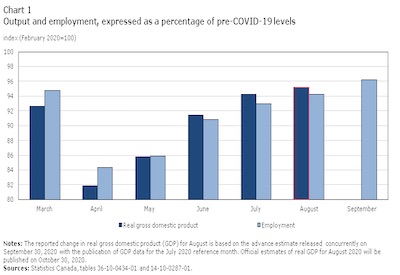
The economic recovery from COVID-19 in the months following the lockdown measures has been uneven across industries and population groups. By July, real gross domestic product was 6% below pre-COVID-19 levels, supported by strong rebounds in manufacturing, construction and retail trade in late spring.
While many professional services with high measures of workplace flexibility and telework capacity were less impacted by the pandemic, many lower-paying services remained severely impacted. Output in accommodation and food services in July remained about one-third below pre-pandemic levels, while activity in arts, entertainment and cultural services remained over 50% below.
A new study, titled “Recent Developments in the Canadian Economy, 2020: COVID-19, fourth edition,” provides an integrated overview of key changes in output and employment in the months following the lockdown measures and highlights the unevenness of the economic recovery across sectors and demographic groups. It is part of a series of articles that present economic developments related to COVID-19 as new data and information become available.
By September, employment had recovered to within 720,000 of pre-COVID-19 levels. While employment among core-age workers (25- to 54-year-olds) was 2.3% below levels observed in February, employment among young Canadians remained over 10% below. Employment among lower-wage workers has been much slower to recover.
As of September, 1.3 million Canadian workers were still impacted by COVID-19 as a result of employment losses or substantial reductions in hours worked, down from a peak of 5.5 million in April, when lockdown measures were in effect.
The article also highlights a range of new findings from a recent presentation on the social, economic and health impacts of the pandemic, titled The Social and Economic Impacts of COVID-19: A Six-month Update, published on October 20. These include the potential impacts of the pandemic on the cumulative earnings of young workers and changes in their self-reported mental health. In July, about 40% of young Canadians reported that they were in very good or excellent mental health, down from 60% prior to the pandemic. Declines in mental health among young Canadians were the largest among the age groups examined.
Source: Statistics Canada, www150.statcan.gc.ca/n1/daily-quotidien/201028/dq201028d-eng.htm?CMP=mstatcan