Consumer Price Index, October 2026
November 18, 2026
The Consumer Price Index (CPI) rose 3.1% year over year in October, matching its 3.1% increase in September.
Upward pressure on the all-items CPI in October was broad-based, stemming from higher prices for natural gas, gasoline, groceries and clothing. Conversely, a decline in prices for cell phone plans, as well as slower price growth for rent, put downward pressure on headline inflation. Excluding energy, the CPI rose 2.0% in October, after increasing 2.1% in September.
The CPI increased 0.2% month over month in October. On a seasonally adjusted monthly basis, the CPI rose 0.2%.
Chart 1
The 12-month change in the Consumer Price Index (CPI) and CPI excluding energy

Chart 2
Prices accelerate in four major components in October

Gasoline prices increase at a faster pace
Year over year, prices for gasoline rose at a faster pace in October (+30.9%) compared with September (+27.8%), partly due to a base-year effect. In October 2025, crude oil prices were lower due to concerns about oversupply, leading to a 4.8% monthly decline in gasoline prices. This decrease is no longer impacting the 12-month movement, putting upward pressure on the gasoline index in October 2026.
Although gasoline prices fell month over month in October (-2.5%), price levels remained elevated amid continued uncertainty surrounding the geopolitical conflicts in the Middle East and Ukraine.
Chart 3
Prices for gasoline increase year over year

Price growth for groceries accelerates in October
Following four consecutive months of slower price growth, prices for food purchased from stores rose at a faster pace year over year in October (+2.0%) compared with September (+1.7%).
Driving the year-over-year acceleration in grocery prices were higher prices for fresh vegetables, up 1.4% in October after falling 2.9% in September. Price increases for sugar and confectionery (+0.4%) and condiments, spices and vinegars (+2.6%) also contributed to accelerating inflation for groceries.
Despite the acceleration in price growth, this was the third consecutive month where grocery inflation increased at a slower pace than the all-items CPI. However, compared with October 2020, prices for groceries have risen 31.9%.
Chart 4
Grocery prices continue to increase at a slower pace than the all-items Consumer Price Index (CPI)

Consumers pay more for clothing
After declining 0.3% year over year in September, prices for clothing rose 1.8% in October. The increase was driven by higher prices for women’s clothing (+2.2%) and men’s clothing (+1.4%).
Prices for clothing were up 3.4% month over month in October, the largest monthly increase since September 2019 (+5.3%). The price increase in October 2026 coincided with higher shipping costs.
Prices for cellular services decline due to a base-year effect
Prices for cellular services fell 6.2% year over year in October, following a 0.8% increase in September. Several wireless service providers increased prices on cell phone plans in October 2025, with prices rising 8.2% month over month. This increase no longer influences the 12-month price movement, putting downward pressure on the cellular services index.
On a monthly basis, prices for cellular services increased 0.6% in October 2026.
Infographic 1
Base-year effect drives year over year decline in prices for cellular services

Regional highlights
Year over year, prices rose at a slower pace in five provinces in October compared with September. The deceleration in British Columbia was mainly due to a year-over-year slowdown in rent prices.
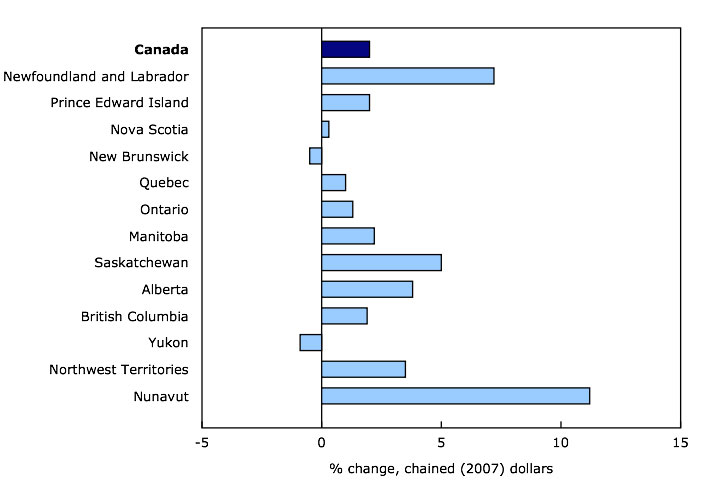
Chart 5
The Consumer Price Index increases at a slower pace in five provinces

Natural gas prices rise year over year in Ontario
In Ontario, prices for natural gas rose 3.0% year over year in October after declining 18.7% in September. Following a one-time rate increase in July 2025, natural gas prices fell 22.4% month over month in October 2025 as prices returned to earlier levels. This decline has now fallen out of the 12-month movement, putting upward pressure on natural gas prices in Ontario in October 2026.
Offsetting the increase for natural gas prices on a year-over-year basis in October in Ontario was slower price growth for property taxes (+3.3%) and rent (+1.1%).
Property taxes rise at a slower pace
Property taxes and other special charges, which are priced annually in October, rose 3.8% at the national level, compared with October 2025 (+5.6%). Contributing to the deceleration was slower price growth in Manitoba in 2026 (+4.5%) compared with 2025 (+19.5%), when prices rose in part due to higher sewer and garbage fees in Winnipeg.
Property taxes accelerated the most in Newfoundland and Labrador, rising 5.9% in 2026, following a 2.6% gain in 2025.
Property taxes and other special charges are determined by four factors: the assessed value of homes and land; municipal and provincial tax rates; charges levied by municipalities for specific services such as wastewater and garbage collection; and homeowner tax rebates.
Chart 6
Property taxes and other special charges decelerate in four provinces