The New Sharing Economy
Rick McCarten
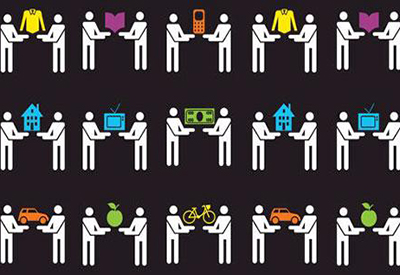
With new apps for our smartphones, the latest trend has been towards a sharing network. Look at the growth of Uber and Airbnb. These services allow people who would normally never connect to do business with one another anywhere in the world.
Estimates from Entrepreneur Magazine peg this sharing economy to grow to $335 billion by 2025 as smartphone use grows and entrepreneurs discover new ways to use it.
Sharing is really no more than bartering, and bartering and trading have been around for a long time. Arguably, the first form of business trading was sharing: people exchanging goods and services.
My brother has an apartment to rent on the Trent River. Two years ago, he couldn’t find anyone interested in renting his property. Today, he has to turn people away. The dynamics of sharing have changed. However, the jury is still out on who will win.
I can recall an example in our industry: back in the 1980s, a local association representing union electrical contractors developed a system to trade employees. When one contractor had extra employees, he would lend them out to someone in the group who needed workers. This way, they could bypass the union hall that sometimes gave them workers with questionable habits. The union hall wasn’t happy about their plan; they saw this service as a sharing economy and they felt they were being usurped, much like taxi services do with Uber.
In another instance, I remember visiting a manufacturing plant in Scarborough, Ontario that made air-conditioning units. I was taken by surprise when I saw that the label on the unit was their competitor’s brand. It was in both companies’ interests to “share” the factory.
Factories that manufacture incandescent light bulbs can be expensive to build. The lighting products are also expensive and fragile to ship. In Australia, at one point, all major producers of light bulbs shared one factory, producing every make of light bulb for the Australian market. They competed in the market, but shared the factory, just like B&Bs share Airbnb.
If you really think about it, business itself is about sharing. Agreeing to purchase a car from GM allows the car manufacturer to sell vehicles at an affordable price. By purchasing a car, we agree to “share” in the manufacturing process with all other purchasers. Similarly, buying a magazine subscription means we agree to “crowd share” the expense of writing and publishing.
Distribution is the same as well. Customers agree to purchase from a shared inventory that is managed by a distributor. In the case of distribution, the agreement comes with the purchase of material — the backend. In the case of companies like Costco or a publisher, the agreement comes upfront prior to receiving.
That’s how we share now, but this is quickly changing. Just about everyone today has a smartphone. The logistics that once qualified “sharing” in the past (contractors sharing employees, manufacturers sharing factories, customers sharing local inventory, annual magazine subscriptions…) are all being questioned by the ability to share on a broader scale, and at the same time in a more precise manner.
A small local distributor, for example, can easily be exposed to the entire nation, while an international distributor can just as easily be exposed to a local customer without the need for bricks and mortar.
With exposure to the Internet, that sharing “circle” is now unlimited and open for all kinds of possibilities. It takes on any shape that works for you regardless of who you know, or where you are located. It threatens to outflank existing modes of sharing… and all it needs is a good idea.
Rick McCarten is VP, Operations, Electro-Federation Canada.