North American Standards for EV Charging Stations
June 15, 2021
New CSA standards help pave the way for certification of electric vehicle charging stations in North America.
The rise of electric vehicles
With the environment a pressing concern, some governments have been taking steps to reduce their dependency upon fossil fuels. For example, the British government plans to ban the sale of new gasoline- and diesel-powered cars by 2035, while California is aiming to end its sale in the state by 2035. In Canada, the government has set targets for zero-emission vehicles reaching 10% of light-duty vehicle sales by 2025 and 100% by 2040 [1].
Electric vehicles — which use a rechargeable battery to power an electric motor — are the most popular option for replacing fossil fuel-powered cars, which include hybrid electric vehicles (HEVs), plug-in hybrid electric vehicles (PHEVs) and all-electric vehicles (EVs). Another option is hydrogen fuel cell-powered vehicles (sometimes called fuel cell vehicles, or FCVs), which use pressurized hydrogen to produce electricity in a fuel cell that powers the motor.
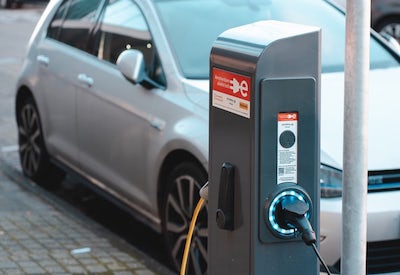
According to Natural Resources Canada, there are currently almost 13,000 electric charging outlets at more than 5,000 stations across Canada (and growing) [2]. Petro-Canada is continuing to expand its Electric Highway, which is a nationwide EV fast-charging network from Halifax to Victoria, while Tesla has activated charging stations along the Trans-Canada Highway, with some at Canadian Tire locations [3].
Lack of standards creates bottleneck
The demand for EV charging stations in Canada has grown at a compound average rate of 46% annually for the past five years [4]. But as more charging stations were becoming available across the country, there was no North American standard that covered all the components that make up these systems.
While there were standards that applied to some components, they didn’t apply to the entire system. Some components were built exclusively for charging stations, so there were no standards for those components, such as for the connector to the vehicle, the electric vehicle cable and the charging circuit interrupting device, or CCID.
That meant manufacturers had to inspect every new set of charging station systems deployed, creating a bottleneck for the development of EV infrastructure in North America.
New standards lead to certification program
To deal with this issue, CSA Group electrical systems experts analyzed the different components of EV charging stations used in the North American market, including the charging station, quick charger, electric vehicle cable, electric vehicle connector and CCID.
This process included research on global safety-related standards that apply under the EV umbrella, such as power transfer to the grid, battery swapping, commercial vehicle charging and mining electrification. This research took into consideration the different existing designs as well as the potential evolution of the technology.
The output of this work was then included in the following harmonized standards:
• CSA C22.2 No.280: Electrical Vehicle Supply Equipment
• CSA C22.2 No. 281.1: Personnel Protection Systems for EV Supply Circuits
• CSA C22.2 No. 281.2: PPE Usage for Charging Systems
• CSA C22.2 No.282: Plugs, Receptacles and Couplers for Electric Vehicles
A Technical Information Letter (TIL) was also created by CSA Group electrical systems experts to encourage the development of safety-related requirements for the cables used to connect charging stations to the vehicles. The types of cables identified in this TIL were added by Canadian Standards Association’s technical committee experts to the Canadian Electrical Code Part I. Further to that, this TIL resulted in an update to the standard CSA C22.2 No. 49 Flexible Cords and Cables, and will be part of a new standard for electric vehicle cables (CSA Standard C22.2 No. 332) that is about to be published.
These standards have allowed for the creation of certification programs for complete charging station system models in North America. For more details about this case, or to discuss challenges you’re facing with bringing EV charging stations to market, please contact us at certinfo@csagroup.org.
This article was first published online by CSA Group; www.csagroup.org/article/north-american-standards-for-ev-charging-stations/
Photo by Ernest Ojeh on Unsplash
References
1. National Resources Canada. “Zero Emission Vehicle Infrastructure Program.”
2. National Resources Canada. “Electric Charging and Alternative Fuelling Stations Locator.”
3. L. Sarabia. “Canada’s EV charging networks are growing at pace, but more is needed.” Electronic Autonomy; https://electricautonomy.ca/2020/03/02/canadas-ev-charging-networks-2020/
4. IEA,“GlobalEVOutlook2020,”2020.[Online]; www.connaissancedesenergies.org/sites/default/files/pdf-actualites/Global_EV_Outlook_2020.pdf