The Trans-Pacific Partnership
Jan 04 2016
Jim Taggart
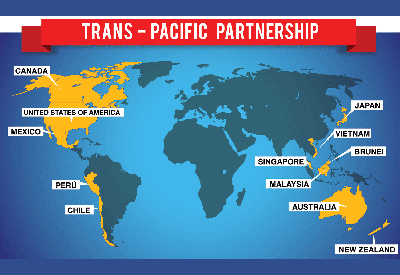
On October 5, 2015, the Government of Canada, along with 11 other national governments, announced the conclusion of negotiations of the Trans-Pacific Partnership (TPP). The TPP is a comprehensive international trade agreement that provides Electro-Federation Canada (EFC) members with preferential access to a market of 792 million people and a combined GDP of CDN$28.1 trillion (or close to 40% of the global economy). The TPP is a good deal for EFC members and all Canadians in general.
EFC has been an advocate for Canada’s participation in the TPP negotiations and believed that we could not afford to be left out of this important deal. Canada’s prosperity is intimately tied to its ability to compete internationally. The TPP will give Canada preferential treatment with these 11 trading partners; without inclusion, Canada and EFC members risked being shut out of our key export markets. The U.S. is Canada’s largest trading partner, and the TPP further solidifies our favoured position with our neighbour.
In the past, many governments (including Canada) mistakenly used protectionist trade policies to block foreign competition. These countries stagnated with these strategies and couldn’t keep up with the growth and productivity of others. These dated trade strategies have given way to true market globalization.
Many of our member companies conduct business and have operation around the globe. Their product, information and services are now moving more freely across borders without barriers. It is EFC’s responsibility to help our members compete in the global marketplace. We encourage the Canadian government to enter into free trade agreements which open up new market opportunities around the world for our members.
Key highlights of the TPP for EFC members include:
• Immediate elimination of import duties on the majority of Canadian exports to TPP markets
• Access to new markets — Japan, Vietnam, Malaysia and Singapore — where Canada currently does not have trade agreements
• The potential for other high growth countries like China and Indonesia to join the TPP in the future
• New regulations to make sure that Canadian companies can compete on a level playing field
• E-commerce rules that will nurture the growth of data technologies essential to Canadian business competitiveness
• Provisions that will make it easier for Canadian companies to move their employees in and out of foreign markets/countries
• Built in trade remedies to prevent product dumping and temporary increases in tariffs
• Enhanced protection of intellectual property
Although the focus of the TPP is on creating a broader free trade area, it is also a features new regulatory rules between Canada and the U.S. It represents an opportunity to resolve trade issues between Canada and the U.S. that have been outstanding since NAFTA. EFC has been championing against an increased call for protectionist “buy local” policies. Buy America legislation may protect local jobs in the short-term. However, in the long-run it ignores the realities of globalization and impairs productivity and growth.
Free trade agreements are not the only component of true globalization; harmonized standards development and certification also can benefit EFC members. Although there has been much progress in the standards harmonization area, there is still a great deal of work to be done. EFC believes there are member benefits derived from a strategy of one standard, one test, and one certification, accepted globally (to the extent possible). EFC has recently been working closely with the Standards Council of Canada (SCC), American National Standard Institute (ANSI) and accredited Standard Development Organizations (SDOs) to achieve this ambitious goal/strategy.
I encourage all EFC members to actively support the TPP and to get involved with these important trade issues and standards harmonization opportunities!
Read more in CEW from Jim Taggart:
– EFC’s “20/20 Vision: Looking Back and Ahead
– We Need to Engage More Women in the Industry. Me included
– Not Your Typical Industry Association
– Breaking Through the Age Barrier
– Amazon: Friend, Foe or Frenemy?
– Electrical Industry – Mergers and Acquisition
– Understanding and Responding to Disparity
Profile: Jim Taggart: A Steady Hand, A Stellar Career
Jim Taggart is President, Electro-Federation Canada.