How Exactly Can Data Improve an Organization’s Efficiencies? 5 Examples
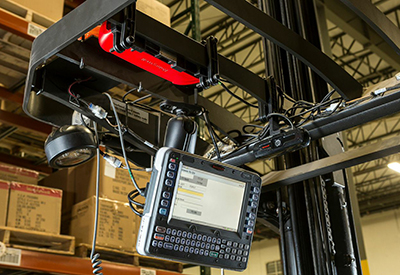
With a good intelligent lighting system, the data gleaned can be as granular as necessary to gain insights.
Consider the following:
1. Motion sensors are one area of focus. Off-the-shelf motion sensors, for example, have on-off cycles. Once they are activated, the time-out is generally set for 15 or 30 minutes. In a warehouse setting, a crew member may enter a specific aisle on a forklift to pick up and remove a pallet. He is there for only a minute or two before driving out, but the lights stay on for 15 minutes. In a high-traffic area, this may mean that the light never goes out because it is retriggered before it reaches its time-out. If data from the lighting system show that the typical time in the aisle is two minutes, the motion sensor can be set to accommodate that, turning off more quickly. If the lights are on only 15% of the time rather than all the time, the resulting savings can be impressive. “We have seen some growth in high-bay lighting used in industrial areas, big box retail, warehouse spaces,” says Jesse Foote, a senior research analyst with Navigant Research. “That can be a good target for lighting controls because you have use of higher wattage fixtures, which offers a bigger bang for your buck. And some of those spaces would turn lights on and leave them on all the time, even though big portions of the space aren’t being used all the time, so the savings from occupancy sensors can be really good.”
2. Intelligent systems can also indicate where the majority of time is being spent in a facility, showing, for example, that the highest occupancy is farthest from the door. By reorganizing the space so the highest traffic area is closest to the door, the lights are in use for a shorter amount of time.
3. A manufacturing facility may need to produce more products, and thus is considering purchasing more equipment. Data from an intelligent system could show that in the manufacturing area, there are no workers after 3:00 pm. The company might find, then, that it needs to add shifts rather than adding equipment.
4. Maximizing demand response and peak usage can turn an entire building into an energy asset. When a company enters into a demand response program with a utility, they are paid by the utility to crank down their energy usage when the utility needs the extra capacity. “But if you’re in the middle of a production run, you don’t want to have to suddenly turn everything off just because the utility has called,” explains Day. “If you have the right intelligence, you’ll know the equipment that you can turn down or turn off first, or you’ll know where you can dim the lights where it won’t be noticed.” Likewise, with a larger commercial or industrial building, when a company pays a higher price for energy during “peak usage,” managers can use data to shift energy loads into a non-peak time, but the data must be detailed enough to allow managers to know that shifts such as this won’t affect profitability. “They need the ability to move things around intelligently,” says Day.
5. Audits using energy data can show that certain equipment is going through a busier-than-usual period. “You might see that a certain compressor is going through a lot more cycles than usual. Maybe a walk-in freezer is going bad. It’s better to fix it rather than to wait until it breaks and you have an emergency on your hands,” says Day. “Using energy data helps you do predictive maintenance.”
Source: Unlocking the Value of Energy & Operational Data, a white paper published by Digital Lumens.