Heat Waves Fuel Urgency to Retrofit Homes and Buildings
Aug 11, 2021
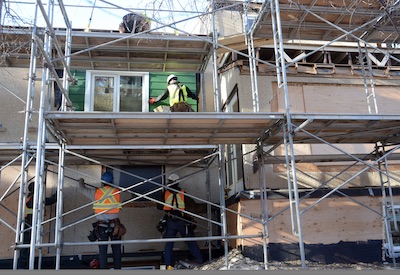
A new report by the Pembina Institute concludes that a national renovation wave of deep retrofits could generate more than $48 billion in economic development, while creating up to 200,000 jobs and significantly lowering carbon emissions. Home retrofits would also reduce heat wave-related deaths and protect people from other extreme weather events caused by climate change by cooling and better insulating homes.
Canada’s Renovation Wave: A plan for jobs and climate details how a massive public investment of $10 to $15 billion per year is urgently needed for housing infrastructure and $6 billion for non-residential buildings, to protect the climate and Canadians. This investment will pay for itself more than twice over in job creation, GDP growth, and increased tax revenues, the analysis finds.
To put this in perspective, Canadians invested $80 billion in renovations in 2019. Canadian utilities, provinces and the federal government currently provide less than $2.5 billion per year of funding for energy renovations. Canada’s buildings account for 17.5% of Canada’s overall emissions, which includes 12.5% from direct combustion of fuels in buildings and another 5% from the production of electricity used in buildings. Paired with a rapid decarbonization of our electricity grids, retrofits could decarbonize most of Canada’s buildings by 2040.
Retrofits replace fossil fuel heating systems with heat pumps and other technologies to eliminate carbon pollution from buildings, and improve the health of residents.
“This report provides ‘proof of concept’ that public investment in retrofits makes good sense for the economy, the environment, and the health of Canadians,” says Tom-Pierre Frappé-Sénéclauze, Director of Buildings and Urban Solutions, Pembina Institute. “To meet climate targets, we need to eliminate carbon pollution from homes and buildings before 2050 by phasing out fossil fuels and powering buildings with clean energy. Heat pumps will also reduce the impact of deadly heat waves, as they cool homes, in addition to heating them. Retrofits make Canadian homes more resilient to extreme weather and floods. A massive investment is needed in our housing infrastructure and the health of Canadians, but it will pay for itself more than twice over in job creation, GDP growth, and increased tax revenues.”
The Pembina Institute provides research, analysis and recommendations to inform policies and practices related to energy. Visit the institute’s website to download a copy of Canada’s Renovation Wave.
Photo: Roberta Franchuk, Pembina Institute